What is Wayfinding?
Wayfinding is essentially knowing where you are, where you are headed, how to get there, how to recognise when you are there, and when needed, how to find your way back out of a place. Wayfinding enables problem solving and moving around spaces by using consistent environmental clues.
‘Nuku Yara Ni siga is Dravuni Island’s war cry. The island warriors, when they are ready to go to battle, after their required training and psyching up, after the signal has been given by the priest that all the signs are aligned, will then in unison and repeatedly, shout out Nuku yara ni Siga! before sailing out on their drua (double-hulled sailing canoes) to battle.
Dravuni has a Kalou Vu and a Vu. Our Kalou Vu is Tuni and our Vu is Ravuravu. Tuni’s life partner was Rokowati, affectionately known as Bulou. Tuni, unlike Ravuravu, had a burekalou, a native temple. There were priests that officiated in the burekalou.
The nature of the battle, yet to be fought, would have been predetermined. It could have been either a direct challenge to an enemy of the Dravuni chief and community or one in support of a friendly chief who would have sent out a call for assistance. Preparation for war would then be put in place to be ready for execution. The navigational details of the sailing to and from the battle zone would also have been worked out. All that is left is the command to move to war footing.
The war cry makes references to sand / beach (nuku), to pull or haul over (yara) and daylight (siga). In its metaphorical use, it becomes powerful and stands for the warriors’ readiness to go to war and that confidence is high to enable them to fight with bravery and to win the battle handsomely and be victorious and to return home successfully in time to haul their drua onto the beach for safety before sun set.
That, however, comes later. The sign of readiness has yet to be given by the priest. The priest, during the time of war preparation would be pinning his eyes on Vunileba Reef for such a sign. Vunileba Reef is part of the Great Astrolobe Reefs to the east of Dravuni – unrestricted to the easterly and south easterly winds that regularly blow. The Reef is clearly visible from the village. Tuni’s priest would be studying the wind direction, its strength and how the waves are cascading on the reef and the shape and size of the sea froth these waves are making.
The priest is looking for the pretty, whitish, fine sea sprays and plumes that resemble the cascading inflorescence of the leba (syzygium neurocalyx), a small tree that grows well on the island – see picture below. Such biological significance is an indication of oneness – that the stars are aligned and the action that follows can only be as predetermined with victory assured.
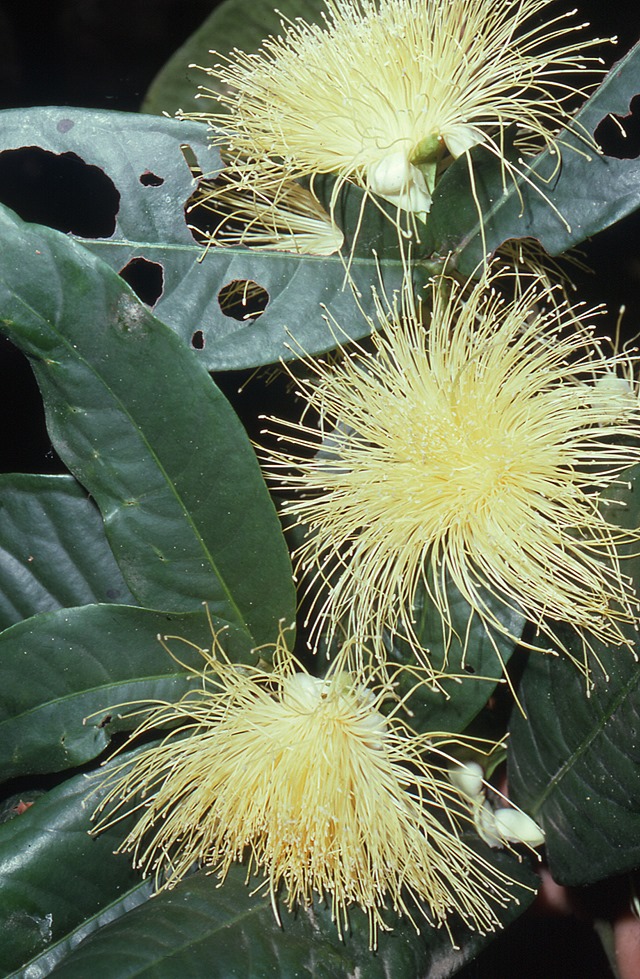
The picture of the cascading inflorescence is the message that the priest is awaiting. The picture speaks volume of historical weather patterns – wind directions, oceanic and sailing conditions. On sighting the patterns unfolding, he concludes that all the stars are aligned and the battle can start. He will then call out to the waiting warriors: Sa se na vunileba – the leba is in full blossom. The warriors, in unison, then call out: Nuku yara ni siga!
From the perspective of Foresight
Foresight is the ability to predict what will happen or be needed in the future. The priest, assisted by the blossoming leba on Vunileba Reef, acquires the foresight he is seeking to predict victory in the oncoming war. Layers of lessons from history over a long period of time would certainly assist in the formulation of such foresight.
Nuku Yara ni Siga from the perspectives of Backcasting
Backcasting is a future-thinking technique where one starts with a desired future and works backward to identify the necessary actions and steps to achieve it.
Clearly from the above, a swift victory in the oncoming war is the desired result. To be able to achieve this, the warriors have to be well prepared and be psyched up. For a swift victory to prevail, weather conditions whilst on war footing, and post war footing, have to be propitious. Historical knowledge, therefore, in all aspects of pre-war preparations that contribute to the desired victory is most desirous.
Daylight is most propitious whilst on war footing. Daylight is also preferable for the victorious return to base and to properly beach the drua before sundown.
Tuni’s priests are thus charged for the mental and strategic preparation of the warriors and to give the signal for the start of the invasion. There will definitely be a welcoming party for the returning victors before sunset.
Nuku yara ni siga ticks all the boxes in “Wayfinding in Time: Strategies for an Unfolding Future” .
Dr. Upolu Luma Vaai, Vice Chancellor of the Pacific’s newest university: Pasifika Communities University, strongly suggested five strategies in developing alternative models and paradigms for the future. These are:
- That of remembrance
- That which is community-based
- That which values faith and spirituality
- That can cope with the complexity and multidimensionality of communities
- That develops a strategy that honours the wisdom and restraint
As for remembrance, Nuku yara ni siga places trust on the warriors and leadership to attend to their respective preparation – physically and mentally – once the logistics of the war have been worked out. Increased activities would drive the communities at large to play their preparatory duties as well. The priest would step up his observations of Vunileba Reef for the signs to proceed to a war footing.
The community, the second factor above, would obviously be involved in preparing the warriors before they go to war. They have to be fed by the villagers, trained by the warrior general and psyched up by the priest.
The warriors have faith in their leaders and in the priest. Some of the warriors would probably be going to war for the first time. For them, faith is what drives them. The priest will ensure that the warriors’ spirituality connects them to the divine power that resides in Tuni’s burekalou.
The Dravuni community, like any other Indigenous communities, is complex. Each individual has a role to play, however. The cooperation that emerges, consistent with collective historical memory and customs, is essential to win battles. However, restraint is fully exercised: advance to war only when the signs are auspiciously aligned.
Conclusions
Nuku yara ni siga underscores, not only the maturation of a strategy that had been proven in the past but also honoured the wisdom of the priest. The priest, however, had to exercise restraint. He had to ensure that the cascading waves on top of Vunileba Reef fully represented and were aligned with those from previous occasions. He could not give the clearance if the signs were not aligned. The risks of losing the battle were intricately etched in his mind.
‘Nuku yara ni siga’ is today’s anachronism. However, it would be unforgivable to disown it completely. Apart from its cultural and historical significance, there are aspects of it that can still be applied as guide for present and future generations. Clearly, wars are a thing of the past. However, the concept of Sa se na vunileba and its applicability to sailing conditions is one that can still be taken advantage of as guidance for today’s mariners.
Whilst such is possible, it would require a lot of commitment on today’s island navigators. During those warring days of the past, the village was located on the eastern side of the island with clear view of Vunileba Reef. The village was relocated to the western side of the island however in about 1888. Vunileba Reef is no longer visible from today’s village. It can be visible, however, if those who are interested can climb up to the central island ridge where they can see the Reef quite clearly looking eastward.
Apart from its utility as a weather vane, the picture and configuration of Sa se na vunileba is ideal as a climatic compass that can help detect the kind of climatic conditions and corresponding intensity of climate change that is inflicting so much damage globally, but especially to the Pacific Island countries and the Pacific Ocean as a whole.
Today’s villagers, especially elders conversant with traditional knowledge, need to make a fresh start as regards the utility of Sa se na vunileba. In these days of rising sea level and changing weather conditions, new knowledge of the reef’s behaviour and waves’ structure and visage need to be reassessed. Sa se na vunileba may need to be re-characterised. Today’s wind conditions and behaviour and greater volume of seawater (due to sea level rise) on reefs that may be subject to structural deterioration will obviously create different versions of the leba inflorescence cascading on the reef.
Furthermore, the changing visages of the leba inflorescence will be an open book on the changing climatic conditions that are inflicting geological and geographical transformation on Dravuni Island. On the western coast of the island, near the present site of the village for instance, coastal erosion over the years has created an indentation on the coastline. The changing picture of the leba inflorescence on the eastern coast will continue to capture the transfigurement to the west of the island.
Clearly, Nuku yara ni siga in its original setting and application, is an anachronism today.
However, it speaks volume of how Indigenous knowledge was, and still is, used to help us navigate the future. It shows us how a synchronicity with the natural environment, and ecological literacy, was essential in living within and alongside the earth, sea and skies that frame our existence.
Where is that ecological mana today? Perhaps we are no longer reading the waves for passage to war zones, but maybe the answers of climate resilience are hidden in ecological wisdom and alignment that our ancestors had. What are the ways that ecological wisdom can help steer our passage in the future that may very well be beyond our ancestors’ wildest dreams?
© Kaliopate Tavola and kaidravuni.com, 2025. Unauthorized use and/or duplication of this material without express and written permission from this blog’s author and/or owner is strictly prohibited. Excerpts and links may be used, provided that full and clear credit is given to Kaliopate Tavola and kaidravuni.com with appropriate and specific direction to the original content.
 kaidravuni
Your claims here contradicts the statement in the tukutuku raraba.
Marika Kereivua( Tukutuku)
A neitou manumanu na sese , a neitou ika na vonu , a neitou kau na vesi. A nodrai vakacaucau ni ravu neitou qase na nukuyava ni siga. A neitou kalou vu ko ravuravu a kena waqawaqa na dadakulaci. A neitou vu ko tuni a watina ko rokowati e rau a taka mai nakauvadra ka tauyavutaki natusara e ono medrau koro.
It stated explicitly here that Ravuravu was not a human ancestor but rather a deity whose manifestation was a sea snake.
The tribes actual progenitor was Tuni with his Wife who migrated from Nakauvadra and established Natusara.
The Yavusa Natusara resides in 2 villages Dravuni and Buliya.
Dravuni has 2 mataqali Natusara and Navusalevu.
Buliya has 2 clans also Nawainasau and Nakorovou.
Rusiate Qirivabea from Buliya verifies and confirms the information given by Marika Kereivua.
Tunidau ni Bokola thats the name given to the One who leads the Yavusa, and that time it was Nacanieli Taqaiwai.
Ucu mai duru nomu i talanoa baleta ni veicalati kei na ka varaitaki na i tukutuku raraba vosa bubului. Laurai vei iko ni o moica na i talanoa me ganita nomu i talanoa lasu baleti ravuravu.